|
|
| Books | |  |
|   |
 | | Total Hits - 268 | Hits Today - 0 | Rating:  (0) | View Ratings | Add Your Rating (0) | View Ratings | Add Your Rating |
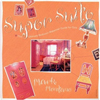
| | This three-ring binder style book has great, fun pages to record information about your new home, key contacts such as plumbers & contractors, and room to record important data such as where you bought your appliances and what style your wallpaper is. It also includes pockets to collect paint samples, pictures, and receipts. Finally, there are graph sheets with punch out furniture to enable you to design your room on paper. I am trying to redecorating my entire house and this book has been such a great help. Now, I buy it for all my friends as a housewarming gift! I recommend it for anyone! |
|
| | ISBN: 0880886773 Date Published on 2/1/2001 |
| | |
 | | Total Hits - 217 | Hits Today - 0 | Rating: (0) | View Ratings | Add Your Rating |
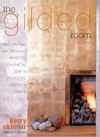
| Decorative metallic effects are sleek enough to complement very contemporary interiors, yet luxurious enough for more traditional décor, while distressed or weathered versions work well with the ever-popular shabby chic look. In short, as we learn in Kerry Skinner's elegant guide, The Gilded Room, metallic finishes can add a wonderful accent to many styles of décor on many surfaces. With gold, silver, and copper leaf, metallic paints and powders, artists' oils, copper wire, wire mesh, and recycled metal plates, Skinner adorns walls, floors, desks, columns, screens, sconces, and much more. Although a few of the techniques can be handled by the novice, most are fairly labor- and materials-intensive, requiring a good deal of preparation and a fair amount of practice. Those who have some previous experience with metal-effect projects should achieve success through Skinner's excellent step-by-step photos and directions. In addition to the 20 projects, the author provides nine eye-catching pages of further painted-patina and patterned-metallic effects, as well as a helpful source list of suppliers. --Amy Handy
Many decorative techniques books include a project that involves either decoupage or gilding, in these two books the techniques get more comprehensive coverage. Skinner provides well-written instructions to projects that include furniture, walls, floors, and decorative accessories in an eclectic, modern style with photographs to accompany each step. The techniques in Gilded Room include metallic paint effect and gilding, concluding with swatches of the range of finishes and effects that can be achieved. Paper Decorator includes papier mache, decoupage, paper mosaic, and latex resist techniques. The wealth of projects contained in each will give an amateur and more experienced crafter plenty of ideas. Purchase where there is a continued interest in decorative techniques.
Copyright 2001 Reed Business Information, Inc.
|
|
| | ISBN: 0823020819 Date Published on 1/1/2001 |
| | |
 | | Total Hits - 1213 | Hits Today - 2 | Rating:  (14) | View Ratings | Add Your Rating (14) | View Ratings | Add Your Rating |
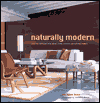
| | A style book, a wish book, and a practical how-to guide to creating handsome and functional interiors, Naturally Modern offers a fresh approach to decorating with natural materials, including wood, leather, stone, and textiles like cotton, linen, and wool.
In a world dominated by technology, nature's raw materials are back in fashion0and with them a taste for interiors that minimize clutter and accentuate sensual appeal. Design writer Ros Byam Shaw offers a wealth of useful and inspirational decorating ideas to help the reader bring the colors and textures of nature into the home. As illustrated in some 250 photographs of contemporary American, European, and Asian rooms, natural materials bring a warmth and intimacy to both country and city dwellings-and a look that will wear beyond the vagaries of fashion.
With its emphasis on simplicity, durability, and comfort, this is an interior design manual perfectly suited to today's lifestyles.
ROS BYAM SHAW is a former features editor of World of Interiors. She is now a freelance journalist and writes on design and interiors for Country Life, House & Garden, and various other publications. She lives in London.
ANDREW WOOD specializes in interior and fashion photography. |
|
| | ISBN: 0810936682 Date Published on 11/1/2000 |
| | |
 | | Total Hits - 338 | Hits Today - 1 | Rating: (0) | View Ratings | Add Your Rating |
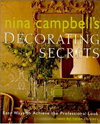
| Interior decoration has never been more popular, yet at the end of the day few people achieve the look they envision when they start a room. Now renowned English decorator Nina Campbell shares the secrets that have brought her world acclaim, offering a step-by-step design strategy that will help turn your original ideas into a beautiful reality.
Nina Campbell's Decorating Secrets is a practical decorating guide based on Nina's unique "layering" approach of combining the different elements in any given room -- from furniture and lighting to pictures and flowers -- to create a unified scheme. The first section covers such basics as determining what you want out of a room, how to assess a particular space with an eye toward natural light and existing architectural details, and why rooms need focal points and how to create one. Next, she walks you through the main rooms of a home and addresses the key decorating decisions for each one, such as choosing the right colors and fabrics to create a certain mood, deciding what to put on the walls and floors, and how to properly position the furniture. This is the heart of the book and where her "layering" philosophy really takes effect. Finally, the last section examines the all-important finishing touches, such as display items and soft furnishings, that add a personal feel to any room.
Lavishly illustrated with two hundred stunning full-color photographs and written in a lively anecdotal style, Nina Campbell's Decorating Secrets is an enjoyable and practical resource.
|
|
| | ISBN: 0609606751 Date Published on 10/31/2000 |
| | |
 | | Total Hits - 185 | Hits Today - 0 | Rating:  (6) | View Ratings | Add Your Rating (6) | View Ratings | Add Your Rating |
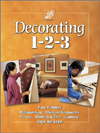
| | More than 100 new decorating projects from America’s #1 home center.
More than 100 projects add finishing touches to every home surface.
All projects illustrated with full color photos.
Reviewed for accuracy by associates from The Home Depot, America’s No. 1 home center. |
|
| | ISBN: 0696211076 Date Published on 10/15/2000 |
| | |
 | | Total Hits - 182 | Hits Today - 1 | Rating:  (3) | View Ratings | Add Your Rating (3) | View Ratings | Add Your Rating |
| "The first major survey text on interior design for over a decade, A History of Interior Design delivers the inside story on 6,000 years of personal and public space. John Pile acknowledges that interior design is a field with unclear boundaries, in which construction, architecture, the arts and crafts, technology and product design all overlap. These topics are woven together in a fascinating narrative that runs from cave dwellings and temple architecture, through Gothic cathedrals and Renaissance palaces on to the grand civic spaces of the nineteenth century and the sleek interiors of modern sky-scrapers." "Em bedded in a social and political context, detailed discussions of famous buildings, from the Parthenon to the Pompidou Centre, are interspersed with investigations of the domestic vernacular - the cottages, farmhouses, apartments and city terraces inhabited by ordinary people. Primary source quotations are used to provide contemporary perspectives on a wide variety of interior settings."--BOOK JACKET. |
|
| | ISBN: 0471356662 Date Published on 10/6/2000 |
| | |
 | | Total Hits - 1417 | Hits Today - 0 | Rating:  (2) | View Ratings | Add Your Rating (2) | View Ratings | Add Your Rating |
| Get answers to your questions about adding or remodeling porches and sunrooms from dozens of real-life examples. You'll find cost, material, and planning information to create an enjoyable, relaxing space that bridges indoors and outdoors. Find out how to do it yourself or work with professionals. Learn how to live with the elements--let the sun in, keep the bugs out. 100 color photos and 32 illustrations. |
|
| | ISBN: 0696211017 Date Published on 9/1/2000 |
| | |
 | | Total Hits - 423 | Hits Today - 0 | Rating: (0) | View Ratings | Add Your Rating |
| | The Hamptons-that glorious stretch of beaches and farmlands along the South Fork of Long Island, New York, from Southampton to Montauk and the many villages in between-is one of the most talked-about and popular resort areas in the country. There, the celebrated, the artistic, the literary, and everyday people commingle all year long. This stunning photo essay offers an insider's view, in text and 200 color pictures, of the private homes, spectacular gardens, and other scenic wonders of the area.
An arresting mix of architectural and interior decorating styles, magnificent plantings and sculpture gardens, and great private art collections-not to mention the incredible sky and ocean-contribute to the enchantment of this popular resort area, drawing Donna Karan, Martha Stewart, Steven Spielberg, and Chuck Close, to name but a few. This book will be irresistible for the thousands who flock to the Hamptons each summer, and for all who like to peek at life behind the hedges in the real Hamptons.
SUSAN MEISEL is a well-known painter and, with her husband, art dealer (and Abrams author) Louis Meisel, a collector of Americana. The Meisels own a home in the Hamptons, in Sagaponack, noted for its extraordinary garden and collectibles.
ELLEN HARRIS and her husband are collectors of Americana, quilts, and tramp art. They also own a home in Sagaponack.
200 photographs in full color, 10 x 91/2" |
|
| | ISBN: 0810934310 Date Published on 9/1/2000 |
| | |
 | | Total Hits - 1120 | Hits Today - 1 | Rating:  (12) | View Ratings | Add Your Rating (12) | View Ratings | Add Your Rating |
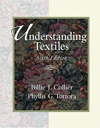
| The purpose of this book is to provide a common background for students who are making a study of textiles. Some students may be planning to enter one of the many career areas that require some knowledge about textiles. Others may be interested in becoming better-informed consumers. Whatever may motivate students to enter an introductory course in textiles, certain basic concepts are essential to their understanding of the subject. It is our hope that these concepts are presented in a clear, logically developed format.
The text begins with an overview of the textile industry. The majority of students are likely to begin their study of textiles without any prior knowledge of the origin, manufacture, and distribution of the wide variety of textile products they use daily. The first chapter presents an overview of the journey of textile products that begins with fiber production and goes on to manufacture of yarns or other components, to fabric production, to design, and to manufacture of the final product. It is our intention to set a context for the chapters that follow in which basic processes, rooted in science and technology, are explored in depth, beginning with the basic building blocks of fabrics: fibers. In subsequent chapters emphasis is placed on the interrelationships of fibers, yarns, fabric constructions, dyes, and finishes. What is known about each of these components is applied to the understanding of textile behavior and performance. The chapters build on each other, much as the textile structure itself is built, and summaries at various stages in the text review the properties that affect performance. We reinforce this view of analyzing component parts of a textile by case studies of particular end use products.
Diagrams and photographs have been selected with care to illustrate the concepts and processes described in the text. Many students study in parts of the country where they have no access to field trips to textile manufacturing sites; therefore, we have included photographs of various types of machinery.
Each chapter includes review questions that invite students to summarize and apply the concepts presented in the text.
The recommended readings at the end of each chapter have been selected to complement the subject matter of the chapters. We have made a conscious effort to include both relatively elementary and highly technical material so as to introduce students to the variety of resources in the field. We have also tried to include readings from the most widely used periodicals in the field. An extensive bibliography, broken down under special subject headings, appears at the end of the book.
After chapter 1 introduces the reader to the various elements from which textiles .are made, their historical development, and the present-day organization of the textile industry, chapter 2, a combination of the second and third chapters of the last edition, establishes the relationship of fiber properties to fiber behavior. It includes the chemical and physical concepts basic to understanding the behavior of textile fibers, and is written for the reader who has had little previous chemistry training. Students should be able to gain some understanding of these elementary concepts and to appreciate not only the integral role that chemistry plays in the manufacture and finishing of textile products but also the role of chemistry in the use and care of textiles by consumers. Often this kind of material is integrated into varying parts of a text. We have not done so here because a separate chapter on the subjects offers a better opportunity to explain elementary chemical and physical terminology and concepts and to relate these concepts to the science of textiles in later discussions. Some instructors may prefer to emphasize this chapter a great deal, whereas others may wish to discuss it only briefly. Either approach may be taken, and the chapter is divided into three parts to enable further flexibility in assigning the material.
The chapters on textile fibers (chapters 3 to 12) begin with the natural fibers (chapters 3 and 4). Cellulosic fibers are discussed first because they are simpler in structure than the protein fibers and because cotton is so widely used. Protein fibers, with emphasis on wool and silk, follow. In chapter 5 we introduce important concepts about manufactured fibers, after which we review manufactured cellulosic fibers in chapter 6. Chapters 7 to 12 cover related groups of manufactured fibers.
Chapters about fibers are all organized in the same way, with many of the topic headings being repeated in each chapter. These topic headings are also used in chapter 2, "Textile Fibers and Their Properties," in order to facilitate comparisons between fibers. Some common brand names of manufactured fibers that are produced under a number of trademarks are mentioned. As companies merge and change products, trademarks become outdated. Readers can keep current through obtaining information on the Internet. Each chapter ends with a table summarizing some of the more important characteristics of the major fiber groups discussed.
From fibers the text moves to yarns and their production (chapter 13), and then discusses fabric structures. Those who have used previous editions of this text will note that chapters dealing with fabric manufacture have been reorganized, with weaving and woven fabrics separated into two chapters (14 and 15), followed by chapter 16 on knitted fabrics. The chapter on nonwovens from previous editions (now chapter 17) has been renamed "Other Fabric Construction Methods" because not all the fabrics discussed are classified as nonwovens. Chapter 19, on multicomponent fabrics, concludes the presentation of fabric construction methods.
For both yarns and fabrics, summaries in the chapters show how fiber, yarn, and fabric construction contribute to the total structure of the fabric and how the structure of the fabric is in turn related to its performance. Performance factors affecting durability, appearance, and comfort are discussed. The intent is to enable readers to begin to put together the parts of a textile product and think in terms of end use properties. Examples of specific end uses are presented as case studies under the heading "Putting It All Together . . . ."
The various methods of finishing fabrics and adding color and design are discussed in chapters 19 to 23. New to this edition is a chapter 19, devoted to the preparation steps that fabrics undergo before being dyed and finished. Chapter 24, "The Care of Textile Products," is entirely devoted to the care of textiles, even though some material on this subject appears in preceding chapters. This chapter is important because of the importance of care in relation to consumer satisfaction with textiles. Chapter 25 explores the important topic of "Textiles and the Environment, Health, and Safety."
Consumer Briefs appear throughout and explore in depth topics of particular interest to consumers. These features include such diverse topics as how to select carpet, developments in manufacture of recycled polyester, washable silk apparel, and ink jet printing.
The final chapter summarizes standard test methods used in the textile industry to evaluate the performance of textile products. Performance is related to specific end uses by additional case studies on sail cloth, outdoor clothing, and automotive textiles.
Special reference tools within the text are provided in appendices. These include the aforementioned bibliography, a glossary of terms (many from the Annual Book of ASTM Standards), and a summary of textile legislation.
A Basic Textiles Swatch Kit is available for use in conjunction with this edition of Understanding Textiles. The swatch kit consists of 120 fabric swatches, mounting sheets, a master list with fabric name/description/fiber content, and a three-ring binder. It is available through Textile Fabric Consultants, Inc., PO. Box 111431, Nashville, TN 37222/615-4597510. ACKNOWLEDGMENTS
We have received assistance in the preparation of this revision from many individuals and organizations and would like to acknowledge those that provided assistance with previous editions as well as those more directly involved in the current edition. We are grateful for the encouragement and support provided by our families, especially our respective husbands, Dr. John R. Collier and Vincent Tortora, as well as for the assistance of colleagues and students. A special thanks is due to Madalina Romanoschi at Louisiana State University who helped with many aspects of the revision.
A number of reviewers from academic institutions and professional organizations provided invaluable input. These included: Dr. Peggy Ott and students in her class at Louisiana State University, who reviewed the revised chapter 2: Wendy Bourg, Emily Caldwell, Charli DeMent, Amber Lea Dunavant, Eva Hickey, Adele Kelry, Lindsey Leggio, Elizabeth Motta, Kathryn O'Quin, Andrew Pham, Mary B. Renfro, Christy Smith, Samantha A. Stormo, and Andrea N, Wilson; and Dr. Robert Barker, American Fiber Manufacturers Association, for reviews of manufacturing flowcharts.
We extend our thanks to the librarians and staff of the libraries at Fashion Institute of Technology, New York; Louisiana State University; the University of Tennessee; Queens College; the Port Washington, N.Y. Public Library; and the New York Public Library.
It is impossible to acknowledge all the help we received in obtaining illustrative material. We have specified the sources in the figures caption, and thank the many individuals who worked on our behalf to find these illustrations and grant permission for their use. Among those we wish to offer special thanks are Judy Gloston, a handweaver of Huntington, N.Y., for giving us the opportunity to photograph her spinning and weaving supplies; Dr. Dong Zhang, the University of Tennessee; Dr. Jenna Kuttruff, Louisiana State University; and Pati Bel-Berger, Southern Regional Research Center.
Finally, we want to thank the many individuals and trade and professional associations that provided both information and illustrations. Information provided by Seth Walters, Continental General Tire, and Dr. Danny Akin, United States Department of Agriculture, Agricultural Research Service (USDA ARS), is gratefully acknowledged. Among the trade associations that provided useful information were the American Association of Textile Chemists and Colorists (AATCC); the American Fiber Manufacturers Association (AFMA); the American Textile Manufacturers Institute (ATMI); the American Society for Testing and Materials (ASTM); Crafted with Pride in the U.S.A. Council, Inc.; INDA, the Association of the Nonwovens Industry; and the International Fabricate Institute (IFI). |
|
| | ISBN: 0130219517 Date Published on 6/9/2000 |
| | |
 | | Total Hits - 738 | Hits Today - 0 | Rating:  (3) | View Ratings | Add Your Rating (3) | View Ratings | Add Your Rating |
| | Jack Kroll in Newsweek has called Harold Pinter "the most fascinating, enigmatic and accomplished dramatist in the English language." Since his first full-length play, The Birthday Party (1958), and continuing with The Homecoming (1965), Pinter has trained a sharp eye on the strange dynamics of modern family life. In his newest play, Celebration, he continues to examine the darker places of relationships. Celebration is an acerbic portrait of a sated culture choking on its own material success. Startling, full of black humor and wicked satire, Celebration displays a vivid zest for life. Also included in this volume is Pinter's classic play The Room |
|
| | ISBN: 0802137083 Date Published on 6/1/2000 |
|
|